Command The Room Before You Fix Your Voice.
Contribute More Value With What You Already Have.
For capable people who are waiting to fix something before they let themselves be seen.
Patrick's story invites your audience to examine the abilities they have already built and choose where to contribute them now.
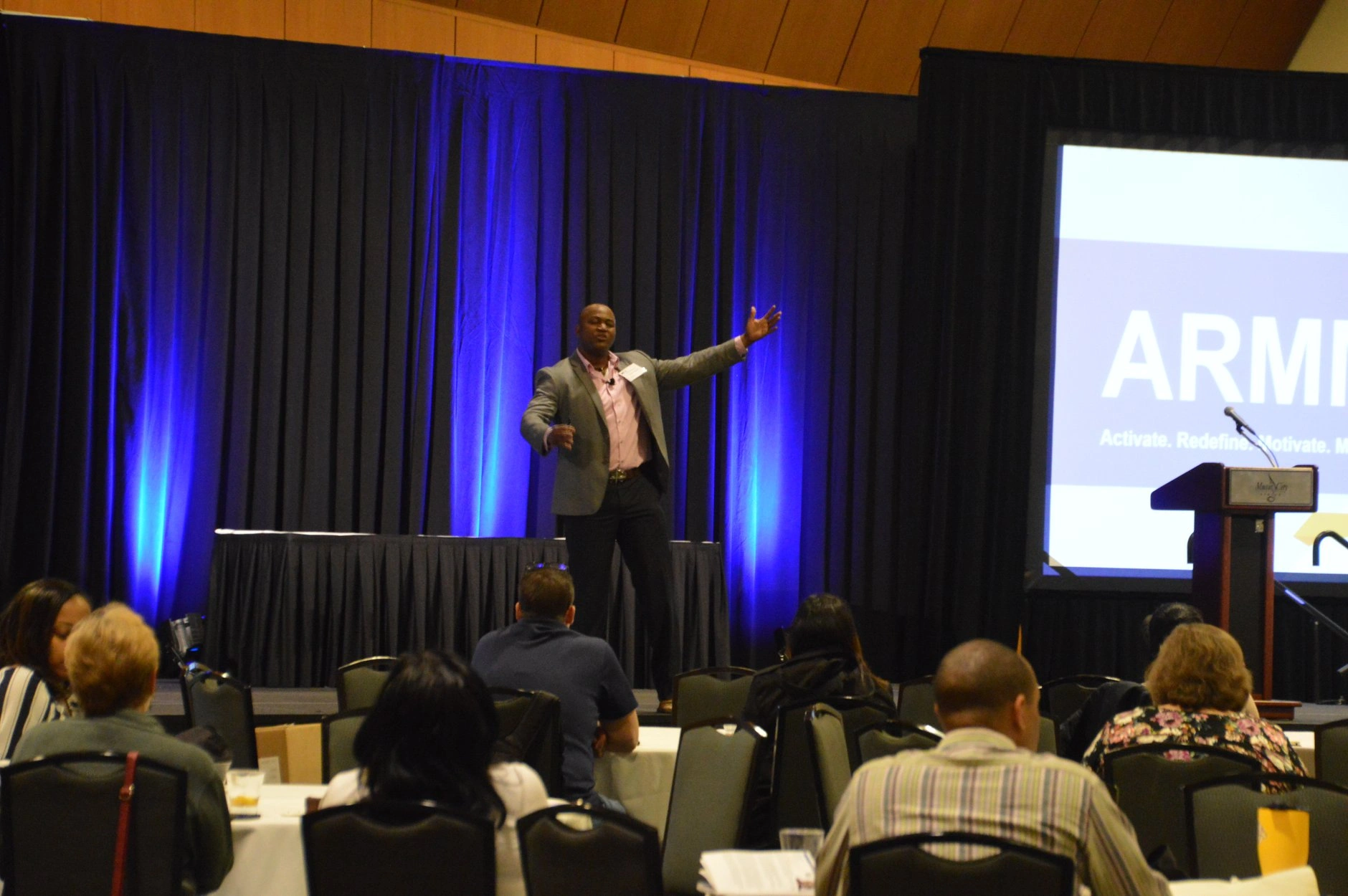
Patrick still stutters. The contribution happens in the room.
Your Room Already Holds Capable People.
They bring experience, knowledge, and abilities built through work and life. Some are still waiting for permission to use them more fully.
One Limitation Can Take Over The Story.
A voice, accent, rejection, or difficult experience can begin to explain every opportunity a person avoids.
Meanwhile, the abilities developed through adapting may go unnamed and unused.
Waiting To Feel Ready Can Keep Them Waiting.
If participation depends on resolving every limitation first, the next contribution can remain out of reach.
A useful idea stays unspoken. An opportunity passes. The room misses what that person could bring.
The Stutter Stayed.
Patrick Took The Stage.
A two-time valedictorian who avoided one graduation speech later became a Toastmasters District Six International Speech Contest finalist.
Today, audiences see him speak while he still stutters. The idea is visible: contribution can begin while the unfinished part remains unfinished.
Give People A Way To Recognize Their Own Evidence.
See Beyond One Condition.
Recognize the difference between a real limitation and the larger story it has come to represent.
Name A Demonstrated Ability.
Examine what years of preparing, adapting, and participating have required them to develop.
Choose A Room To Use It.
Identify a place where that ability could contribute, without waiting for every difficulty to disappear.
The Message Happens Live In Front Of Your Audience.
Patrick brings his own experience as an example, then turns the attention toward what it may help people recognize in themselves.
“Patrick Meniboon inspires me to take who I am right now and authentically encourage others. I don't have to be perfect to make a difference.”
Diane Windingland · Keynote Speaker · Author · Speech Coach
Built Around Your Room.
For professionals, emerging leaders, and leadership development audiences.
Keynote, about forty-five minutes · Workshop
Stories, examples, and length adapt to the audience and the outcome you want.
Discuss Your Event ↗▶ Watch Patrick Speak ↗
Make Room For The Contribution Already In The Building.
Bring a message your audience can see, examine, and apply to its own experience.
Book Patrick For Your Event ↗Explore All Programs ↗